


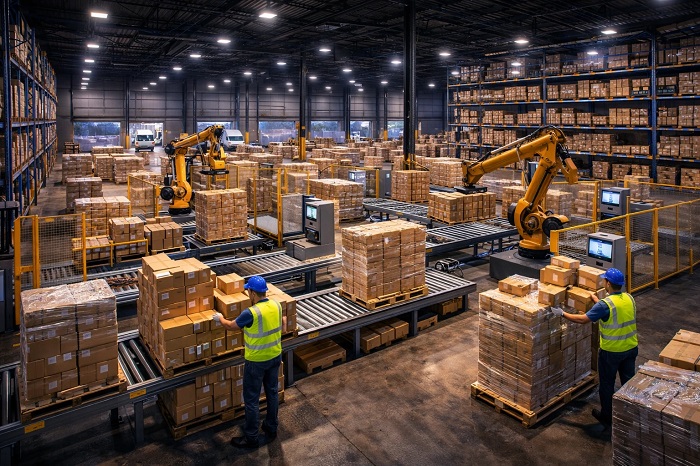
Palletizing: enhancing warehouse efficiency and optimizing logistics
Palletizing is an essential process in warehouse management and logistics, helping businesses handle and transport goods more efficiently. By placing products onto pallets, businesses can optimize storage space, reduce handling times, and ensure that goods are easily accessible throughout the supply chain.
Whether in manufacturing, retail, or e-commerce, palletizing helps businesses manage their inventory effectively, ensuring that products are well-protected during storage and transportation while making the distribution process more efficient. In industries where logistics is key, having a streamlined palletizing process can make a significant difference in cost savings, speed, and overall operational efficiency.
In this article, we’ll explore the benefits of palletizing, how it works, and why businesses like Freitty are leveraging this process to enhance their supply chain operations.
What is Palletizing?
Palletizing refers to the process of arranging goods or products onto pallets for easier handling, storage, and transportation. A pallet is a flat structure, typically made of wood, plastic, or metal, that serves as a base to hold products. Palletizing allows businesses to move and store multiple items at once using forklifts, pallet jacks, or automated systems.
The palletizing process can include:
• Arranging Goods on Pallets: Workers or automated systems place goods onto a pallet, arranging them in a stable and efficient manner.
• Securing the Load: Goods are often secured to the pallet with stretch wrap, shrink wrap, or strapping to ensure they stay in place during handling and transportation.
• Optimizing Space: By palletizing goods, businesses can use warehouse space more efficiently, stacking pallets vertically and creating a more organized storage layout.
Freitty utilizes advanced palletizing techniques to improve the efficiency of warehouse operations, ensuring that goods are stored and handled in the most effective way possible. Our expertise in palletizing helps reduce costs and improve overall supply chain performance.
Why Palletizing is Essential for Efficient Warehouse and Logistics Operations
Efficient palletizing is a key factor in maintaining smooth operations within a warehouse and across the entire logistics process. Here’s why palletizing is so important:
• Space Optimization: By grouping goods together on pallets, businesses can maximize storage space within their warehouses. Palletized goods are easier to stack and store, allowing companies to fit more inventory in less space. This helps reduce the need for additional warehouse space and makes it easier to organize products based on size, weight, or category.
• Increased Handling Efficiency: Moving palletized goods is much quicker and safer than handling individual items. Forklifts and pallet jacks can easily lift and move large volumes of products at once, reducing the time required for loading, unloading, and stock rotation. This increases warehouse throughput and reduces labor costs.
• Improved Shipping and Distribution: Palletizing products ensures that they are packaged in a way that is optimized for transportation. Whether it’s shipping by truck, rail, or ship, palletized goods are easier to load and unload, which reduces the risk of damage and ensures that goods are delivered efficiently and on time.
• Protection During Transportation: Goods that are palletized and securely wrapped are less likely to be damaged during transport. This is especially important for fragile or high-value items. Palletizing helps keep products stable and prevents shifting or breakage during transit.
• Streamlined Inventory Management: With products organized and stored on pallets, businesses can track their inventory more easily. Pallets can be scanned using barcode or RFID systems, providing real-time inventory data that helps businesses manage stock levels, order fulfillment, and replenishment efficiently.
How Does the Palletizing Process Work?
The process of palletizing typically involves several key steps to ensure that products are properly organized and ready for transport:
• Preparing the Goods: Before products are placed on pallets, they need to be sorted and packaged, ensuring that they are stable and secure. This may involve grouping similar items together or ensuring that fragile products are properly cushioned.
• Arranging Products on Pallets: Workers or automated systems place the goods onto the pallet, arranging them in an efficient, stable manner. Pallets can be arranged using different patterns, such as column stacking, interlocking, or corner stacking, depending on the type of product and its size.
• Securing the Load: Once the goods are arranged on the pallet, they are secured using shrink wrap, stretch wrap, or strapping to ensure that the load stays in place during transport. The load must be stable enough to withstand the handling processes, including lifting, stacking, and transportation.
• Labeling and Tracking: Each pallet is often labeled with an identification code, barcode, or RFID tag that allows for easy tracking throughout the supply chain. This helps ensure that pallets can be scanned, tracked, and managed in real-time during the logistics process.
• Storing or Shipping the Palletized Goods: After the pallet is ready, it is either stored in the warehouse for future use or shipped directly to its destination. Depending on the logistics strategy, pallets may be transferred between warehouses, distribution centers, or directly to retail locations.
The Benefits of Palletizing for Businesses
The advantages of palletizing extend beyond just efficient warehouse management. Some of the key benefits include:
• Cost Savings: By reducing the time it takes to handle and move goods, businesses can save on labor costs and improve operational efficiency. Palletizing also reduces the risk of damage, preventing costly losses due to breakage or spoilage.
• Faster Turnaround Times: Palletized goods are easier to store and retrieve, which leads to faster order fulfillment times. This improves overall delivery speed and enhances customer satisfaction, especially for businesses in industries like e-commerce or retail.
• Better Inventory Control: Palletizing ensures that goods are stored in a systematic and organized manner, making it easier to track inventory levels and ensure accurate stock counts. This leads to fewer errors and better inventory visibility.
• Safer Handling: With pallets, goods are easier to move, reducing the risk of accidents in the warehouse. Forklifts and pallet jacks allow workers to handle heavy or bulky items with ease, improving workplace safety.
• Scalability: As businesses grow, palletizing makes it easier to scale operations. By using standardized pallets, companies can increase the volume of goods they handle without significantly increasing warehouse space or staffing requirements.
Freitty’s Palletizing Solutions
Freitty offers comprehensive palletizing services that help businesses optimize their warehouse operations and improve inventory management. Our advanced equipment and experienced team ensure that your goods are palletized efficiently, reducing costs and improving supply chain performance.
Our palletizing solutions include:
• Automated Palletizing Systems: We use the latest automated palletizing technology to increase efficiency, reduce labor costs, and ensure consistency in how products are stacked and secured.
• Real-Time Tracking: With our advanced inventory management system, businesses can track their palletized goods in real-time, ensuring complete visibility throughout the logistics process.
• Customized Palletizing Solutions: Whether you’re dealing with fragile items, oversized products, or bulk goods, Freitty offers tailored palletizing solutions to meet your specific business needs.
• Secure and Safe Handling: Our palletizing process ensures that goods are securely wrapped and stacked, reducing the risk of damage and improving product protection during transport.
The Future of Palletizing: Automation and Innovation
As logistics continues to evolve, palletizing will continue to improve with the use of automation and advanced technology. Some of the trends that will shape the future of palletizing include:
• Robotic Palletizing: Automated robotic systems are already being used in some warehouses to automate the palletizing process. These systems can work faster, more accurately, and at lower costs than manual labor.
• Artificial Intelligence: AI will play a bigger role in optimizing palletizing strategies. By analyzing patterns and data, AI can help businesses optimize pallet stacking patterns, predict demand, and improve warehouse operations.
• Smart Warehouses: The integration of IoT sensors and real-time tracking systems in warehouses will allow for more efficient palletizing by providing better inventory control and automated systems that help optimize pallet placement.
Conclusion: Why Choose Freitty for Your Palletizing Needs
Freitty offers cutting-edge palletizing solutions that help businesses optimize their warehouse operations, improve inventory management, and reduce logistics costs. Whether you need to streamline your current palletizing process or implement advanced automation, Freitty provides the expertise and technology to meet your needs.
By improving warehouse efficiency and reducing handling times, Freitty helps businesses deliver goods faster and more cost-effectively. Visit Freitty.com today to learn more about how our palletizing services can optimize your logistics operations.